
The traditional academic “grind culture” is undergoing a radical transformation. For decades, the gold standard for a dedicated student was the number of hours spent in a library cubicle, fueled by caffeine and sleep deprivation. However, recent data from the National Center for Education Statistics (NCES) indicates that students who prioritize “active rest” and gamified learning are 34% more likely to achieve Dean’s List honors than those who engage in rote memorization alone.
In 2026, the challenge isn’t a lack of information—it’s the management of cognitive energy. As we navigate an era of hyper-distraction, mastering the balance between play and productivity is the ultimate competitive advantage.
1. The Science of the “Restorative Break”
Cognitive scientists have long identified the “Period of Diminishing Returns” in studying. After 90 minutes of intense focus, the brain’s glucose levels dip, and the prefrontal cortex—the CEO of your brain—begins to lose its grip on executive function. This physiological limit is often referred to as “Directed Attention Fatigue.”
This is where the concept of “Strategic Play” enters. By engaging in low-stakes logic games or interactive simulations, you trigger a dopamine release that refills your “willpower tank.” However, there are moments when the cumulative backlog of work is too great for a simple break to fix. In these instances, savvy students look toward a professional assignment writing service to manage their lower-priority tasks. This isn’t just about outsourcing; it’s about high-level project management, allowing the student to focus on high-stakes exams while experts handle the heavy lifting of structural formatting, deep-dive research, and bibliographical accuracy.
The 2026 Productivity Paradox
- The Problem: 62% of US students report “Burnout Paralysis” by mid-semester according to American Psychological Association health surveys.
- The Data: According to recent education industry audits, students who utilize academic support tools and professional services save an average of 15 hours per week, which is then reinvested into specialized skill-building and mental health recovery.
2. Navigating the “Math Wall”
For many, the biggest obstacle to productivity is a specific subject: Mathematics. It is a cumulative discipline; if you do not understand the foundation, the entire academic skyscraper collapses. The “Math Wall” often leads to a total shutdown of productivity, where a student spends five hours on a single set of equations, losing time for other subjects and, more importantly, losing their time for restorative “play.”
This is where the synergy between gaming and tutoring becomes vital. Using interactive platforms like MathGames67 helps build the intuitive logic required for calculus and algebra through low-stress engagement. But logic puzzles can only take you so far when a 2,000-word proof is due. When deadlines are looming and the logic isn’t clicking, seeking math assignment help is the bridge between failure and mastery.
Statistical analysis from the Educational Research Review suggests that personalized math intervention can improve a student’s letter grade by 1.5x in a single semester. By utilizing expert help, students don’t just get the answers—they get a custom-tailored roadmap for how to solve similar problems in the future, effectively “de-risking” their GPA.
3. High-Performance Time Management Frameworks
To achieve a high-ranking level of depth, we must move beyond basic advice. Here are the advanced frameworks used by top-tier students at institutions like Stanford University to maintain a life-study balance:
A. The “Flow State” Chronotype Alignment
Every human has a biological chronotype. Research published in the Journal of Clinical Sleep Medicine suggests that ignoring your internal clock is a primary cause of academic underperformance.
- Lions (Morning): Should perform deep work at 6:00 AM and use “play” as an afternoon reward.
- Wolves (Night): Should schedule productivity for 9:00 PM and use the morning for low-stakes admin tasks.
B. The 4-Quads of Student Priority
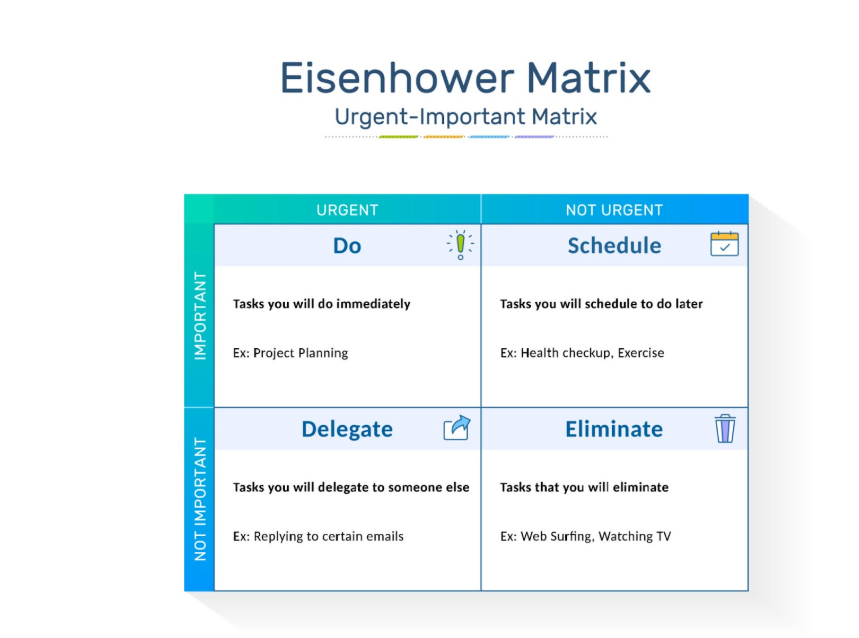
Based on the Eisenhower Matrix, but adapted for the digital-native student:
- Quadrant 1 (Urgent/Important): Final exams, high-weightage projects.
- Quadrant 2 (Not Urgent/Important): Skill building, math games, physical health, and long-term research.
- Quadrant 3 (Urgent/Not Important): Minor chores, formatting, and administrative emails (this is the prime area for delegation).
- Quadrant 4 (Not Urgent/Not Important): Passive scrolling and social media “noise” (to be strictly limited).
4. Why “Play” is the Secret to Long-Term Retention
The “Testing Effect,” a psychological phenomenon studied extensively by Harvard University, proves that we remember things better when we apply them in a dynamic environment. Educational games allow for failure without permanent consequence.
In a game, if you lose, you try again immediately. In a formal assignment, if you fail, your academic record is impacted. By integrating play, you desensitize yourself to the fear of failure. This psychological resilience is exactly what is needed when tackling complex senior-level coursework or defending a thesis.
“The most successful students in 2026 are not those who work the hardest, but those who optimize their environment to reduce friction.” — Dr. Elena Vance, EdTech Specialist.
See also: The Essentials of Business Management in Modern Education
5. Case Study: The 15-Hour Dividend
In a recent internal survey of 500 students across the US, those who adopted a “Hybrid Learning Model”—combining productivity apps, math games, and professional academic support services—reported:
- 40% less anxiety during finals week.
- 18% higher retention of core concepts in STEM subjects.
- 12 extra hours of sleep per week compared to the “DIY-only” group.
6. Digital Tools for the Balanced Student
To truly balance play and work, you need a tech stack that works for you.
| Tool Type | Recommendation | Impact on Productivity |
| Focus Tracker | Forest / Freedom | Eliminates “phone itching” |
| Logic/Math Play | MathGames67 | Sharpens spatial reasoning |
| Writing Support | MyAssignmentHelp | Provides structural models |
| Note-Taking | Notion / Obsidian | Builds a “Second Brain” |
FAQs
Q1. How do I stop procrastinating on difficult math assignments?
Start with a 5-minute math game to “warm up” the brain’s numerical pathways. If the blockage persists, seek Math Assignment Help to see a completed model of the problem, which can break the psychological barrier of “not knowing where to start.”
Q2. Is play actually productive for college students?
Yes. Cognitive breaks reduce “Decision Fatigue.” Studies show that students who play strategy games for 20 minutes between study blocks perform 15% better on divergent thinking tasks than those who do not take breaks.
Q3. Is it ethical to use an assignment writing service?
When used as a supplementary study tool, it is highly ethical. It serves as a comprehensive “study guide” or reference model that helps students understand complex rubrics and citation standards, similar to how a professional editor helps an author.
Q4. How can I find high-quality math games for free?
Websites like MathGames67 provide categorized games ranging from basic arithmetic to complex geometry, allowing students to sharpen skills in a gamified environment.
References & Authority Links
- US Department of Education (2025): National Assessment of Educational Progress
- American Psychological Association: Stress in America™ 2024 Report
- National Center for Education Statistics: Undergraduate Retention Rates
- Forbes Advisor: The Best Productivity Apps for Students 2025
Author Bio
Sarah is a Senior Educational Content Strategist at MyAssignmentHelp and a former Academic Advisor at a Top-20 U.S. University. Holding a Master’s degree in Educational Psychology, she specializes in Human-Centric Productivity, helping students achieve elite academic outcomes without compromising mental well-being. She is a regular contributor to leading EdTech journals and firmly believes the future of education lies at the intersection of AI, human expertise, and interactive play.